Navigating Coastal Properties Home Insurance: A Comprehensive Guide to Protecting Your Beachfront Investment

Owning a home by the ocean is a dream for many. The soothing sound of breaking waves, panoramic ocean vistas, and immediate access to the beach offer an unparalleled lifestyle. However, coastal living comes with a unique and complex set of meteorological and environmental challenges. From devastating hurricane-force winds to gradual saltwater corrosion and sudden tidal surges, beachfront assets face threats that inland properties never encounter. This is where specialized coastal properties home insurance becomes an indispensable shield.
Standard homeowners insurance policies often fall short when addressing the high-risk profiles of coastal zones. For coastal homeowners, understanding the nuances of specialized insurance, coverage limits, and catastrophic risk mitigation is crucial for safeguarding their financial investments. This comprehensive guide explores everything you need to know about securing and optimizing your coastal properties home insurance to ensure your piece of paradise remains protected.
Why Standard Homeowners Insurance Falls Short in Coastal Areas
Many first-time coastal homebuyers mistakenly assume that a standard homeowners insurance policy (commonly known as an HO-3 policy) will fully protect their oceanfront property. In reality, standard policies are designed for average risks and typically exclude or heavily restrict coverage for the perils most common to coastal environments.
Standard policies generally exclude damage caused by rising waters, tidal waves, and storm surges. In coastal zones, water damage is frequently tied to storm surges during hurricanes or tropical storms, which are legally classified as floods rather than windstorm damage. Consequently, if a hurricane pushes ocean water into your living room, a standard policy will not cover the destruction.
Furthermore, in coastal states such as Florida, Texas, South Carolina, and New York, insurance providers often exclude wind and hail damage entirely from standard policies. Homeowners in these areas must purchase separate windstorm insurance or pay a significantly higher, percentage-based deductible for wind-related claims.
Key Coverage Components of Coastal Properties Home Insurance
To adequately protect a beach house or coastal estate, policyholders must assemble a robust portfolio of coverages. A comprehensive coastal properties home insurance plan typically comprises several distinct policies and endorsements working in tandem:
1. High-Value Dwelling Coverage
Dwelling coverage pays to repair or rebuild the physical structure of your home if it is damaged by a covered peril. For coastal homes, this coverage must account for the highly inflated cost of coastal construction. Rebuilding on the coast requires specialized labor, marine-grade materials, and compliance with modern, strict local building codes (such as elevating the structure on pilings).
2. Separate Windstorm and Hail Insurance
If windstorm coverage is excluded from your primary policy, you must secure a wind-only policy. This coverage is critical for protecting your roof, siding, and windows from hurricane-force gusts. Be prepared for a “named storm deductible,” which is typically calculated as 1% to 10% of the home’s total insured value, rather than a flat dollar amount.
3. Flood Insurance (NFIP and Private Market)
Since flood damage is universally excluded from standard home insurance, flood insurance is mandatory for any coastal property secured by a mortgage in a high-risk flood zone. Property owners can purchase coverage through the Federal Emergency Management Agency’s (FEMA) National Flood Insurance Program (NFIP) or through the rapidly growing private flood insurance market.
4. Excess Flood Insurance
The maximum building coverage limit offered by the NFIP is $250,000 for residential properties. For high-value coastal properties, this is often highly insufficient. Excess flood insurance provides an additional layer of financial protection, covering damage that exceeds the primary $250,000 limit up to millions of dollars.
5. Loss of Use / Additional Living Expenses (ALE)
If a catastrophic storm renders your coastal home uninhabitable, ALE coverage pays for your temporary housing, meals, and relocation costs while your home is being repaired or rebuilt. Given that rebuilding along the coast can take a long time due to supply chain delays and labor shortages post-disaster, robust Loss of Use coverage is vital.
Standard vs. Coastal Home Insurance: A Comparative Analysis
To clarify the differences, the table below highlights how coverage varies between a standard inland homeowners policy and a dedicated coastal properties home insurance strategy:
| Feature | Standard Homeowners Insurance (Inland) | Coastal Properties Home Insurance |
|---|---|---|
| Wind & Hail Coverage | Included in standard deductible ($500 – $2,500). | Often excluded; requires separate deductible (1% – 10% of home value). |
| Flood & Storm Surge | Excluded (requires optional separate purchase). | Excluded; mandatory to purchase separate NFIP or private flood policy. |
| Construction Cost Estimation | Standard local rebuilding rates apply. | Inflated due to specialized materials (e.g., impact glass, concrete pilings). |
| Policy Availability | Offered by almost all major national carriers. | Limited availability; often written by surplus lines or state-backed pools (e.g., Citizens). |
| Deductible Structure | Flat-rate fee per claim occurrence. | Split deductibles (Standard, Wind/Hail, and Hurricane/Named Storm). |
Key Factors Influencing Coastal Insurance Premiums
Underwriting coastal properties is an intricate science. Insurers utilize highly advanced catastrophe modeling to assess the risk of each individual property. The premium you pay for coastal properties home insurance is influenced by several key variables:
- Distance to the Coastline: Generally, the closer a property is to the high-tide line, the higher the insurance premium. Properties within the first mile of the coast face the highest risk of wind and water damage.
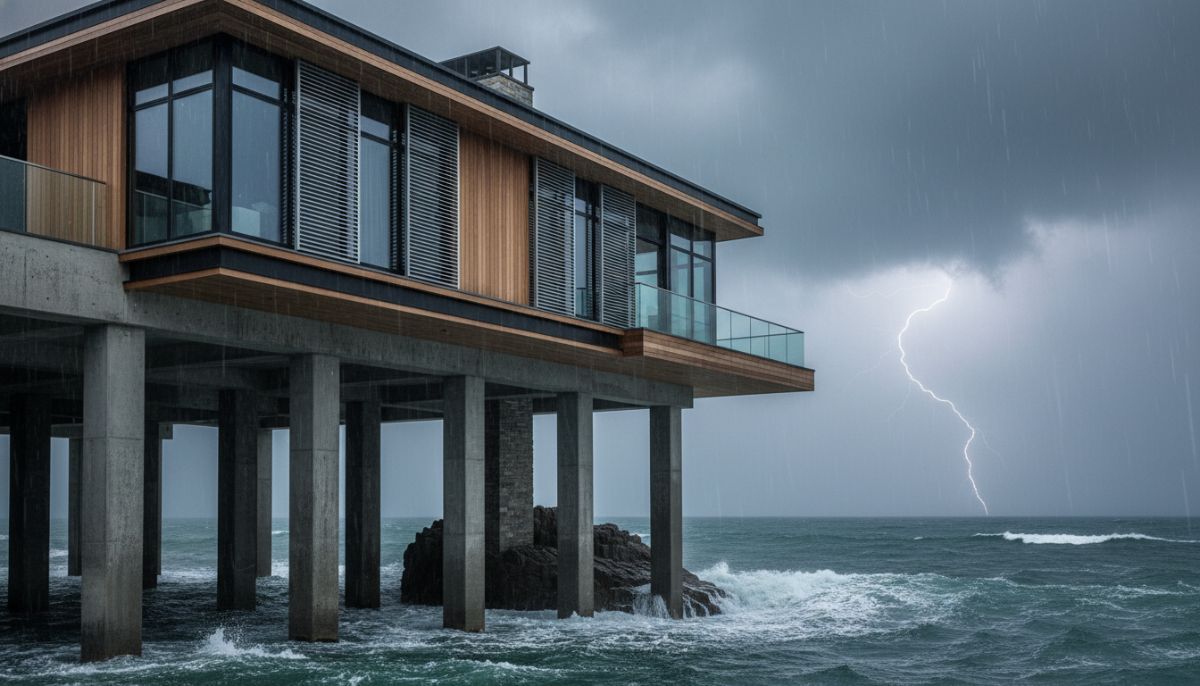
- Elevation of the Lowest Floor: Houses elevated on pilings or stilts allow storm surges to pass underneath the structure, drastically lowering the risk of structural failure and resulting in lower flood insurance premiums.
- Year of Construction and Building Codes: Newer homes built to withstand modern building codes (such as the strict International Residential Code or Florida Building Code) perform significantly better in storms, earning substantial discounts.
- Roof Shape and Material: Hip roofs (which slope downward on all four sides) perform better in high winds than gable roofs. Metal roofs and impact-resistant shingles also lower insurance risks.
- Wind Mitigation Features: The presence of hurricane straps, storm shutters, and impact-resistant glass protects the home’s envelope from breaching, which prevents total roof failure.
- Surplus Lines Insurers: These are highly specialized insurance companies that write policies for non-standard risks. They are not licensed by individual state insurance departments in the same way standard carriers are, but they possess the financial flexibility to cover high-value, high-risk coastal estates.
- State-Backed FAIR Plans: Many coastal states operate Fair Access to Insurance Requirements (FAIR) Plans or state-backed insurance pools (such as Citizens Property Insurance in Florida or the Texas Windstorm Insurance Association). These serve as insurers of last resort for properties that cannot find coverage in the private marketplace.
- Specialty Independent Brokers: Working with an independent insurance agent who specializes in coastal properties is highly recommended. They have access to niche markets and surplus lines carriers, enabling them to customize a comprehensive insurance package tailored specifically to your coastal property’s geographical risk profile.
How to Lower Your Coastal Properties Home Insurance Premium
While insurance for coastal properties is inherently more expensive than inland coverage, homeowners can take proactive steps to mitigate risks and lower their annual premiums:
“In coastal risk management, expecting the best while preparing for the worst is not just a philosophy—it is a financial necessity. Retrofitting a coastal property to withstand nature’s fury is the most reliable way to secure affordable insurance premiums.”
Secure a Wind Mitigation Inspection
In many coastal states, insurers are legally mandated to offer premium discounts for homes with certified wind-mitigation features. Hiring a licensed inspector to document your home’s roof-to-wall connections, roof deck attachment, and opening protections can yield thousands of dollars in annual savings.
Install Storm Shutters and Impact Glass
Protecting your home’s openings (windows and doors) is critical. If a windstorm shatters a window, high winds enter the home, creating internal pressure that can easily blow the roof off. Installing certified impact-rated glass or heavy-duty storm shutters significantly lowers your risk profile.
Consider Raising Your Deductible
If you have a strong financial reserve, opting for a higher deductible (such as moving from a 2% to a 5% hurricane deductible) will immediately lower your monthly or annual premium payments. However, you must ensure you have the cash on hand to cover this deductible if a disaster strikes.
Invest in Elevation
For homes undergoing major renovations, elevating the entire structure above the Base Flood Elevation (BFE) set by FEMA is a highly effective way to reduce flood insurance premiums by up to 50% or more.
Selecting the Right Carrier for Your Coastal Home
When shopping for coastal properties home insurance, you may find that many traditional, national brand-name insurers do not write policies in high-risk coastal ZIP codes. In such cases, you will need to look into specialized avenues:
FAQ
Is flood insurance mandatory for all coastal properties?
Flood insurance is federally mandated if you have a mortgage from a federally regulated or insured lender and your coastal property is located within a Special Flood Hazard Area (SFHA), commonly designated as Zone A or Zone V on FEMA flood maps. If you own the property outright with no mortgage, it is not legally mandated, but it is highly recommended, as storm surges are the leading cause of coastal property destruction.
What is a hurricane or named storm deductible, and how does it work?
Unlike a standard flat-fee deductible (e.g., $1,000), a hurricane or named storm deductible is typically calculated as a percentage of your home’s insured dwelling value (usually 1% to 10%). For example, if your coastal home is insured for $500,000 and you have a 5% hurricane deductible, you must pay $25,000 out of pocket for repairs before your insurance coverage kicks in for damage caused by a declared hurricane.
Can I get coastal properties home insurance if my home is built on stilts?
Yes. In fact, homes built on concrete or pressure-treated wood stilts (pilings) are often easier and cheaper to insure for flood risk than homes built directly on the ground in coastal zones. Elevation allows storm surges and high waves to flow under the living spaces, preventing major structural damage to the primary dwelling.
What is wind mitigation, and why is it important for coastal homeowners?
Wind mitigation refers to specific construction features designed to minimize wind damage during hurricanes or severe storms. This includes hurricane straps, secondary water barriers on the roof, hip-shaped roofs, and impact-resistant windows. Securing a certified wind mitigation inspection is highly important because it proves to your insurer that your home is resilient, qualifying you for significant premium discounts.